arrow_backBack to Projects
Carbon Emission Optimization in CNC Turning
Undergraduate Thesis · Industrial & Production Engineering
Collaborative Research · Team of 3 People
Microsoft ExcelMatlabMinitabSustainable Manufacturing
Overview
A sustainability-focused thesis investigating how cutting parameters in CNC turning — speed, feed, and depth of cut — affect energy consumption and carbon emissions, with the goal of identifying machining conditions that cut environmental impact without sacrificing performance.
Methodology
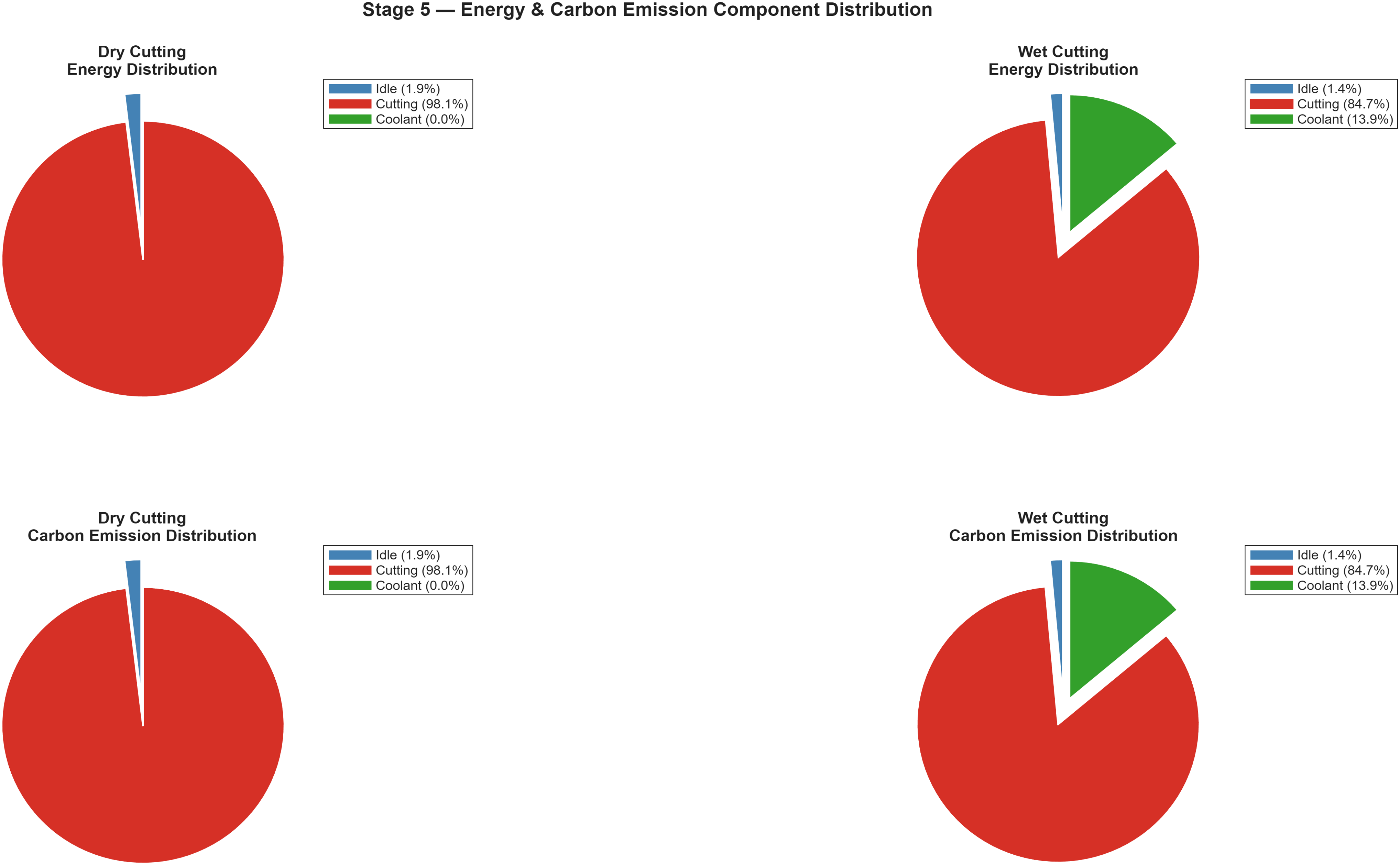
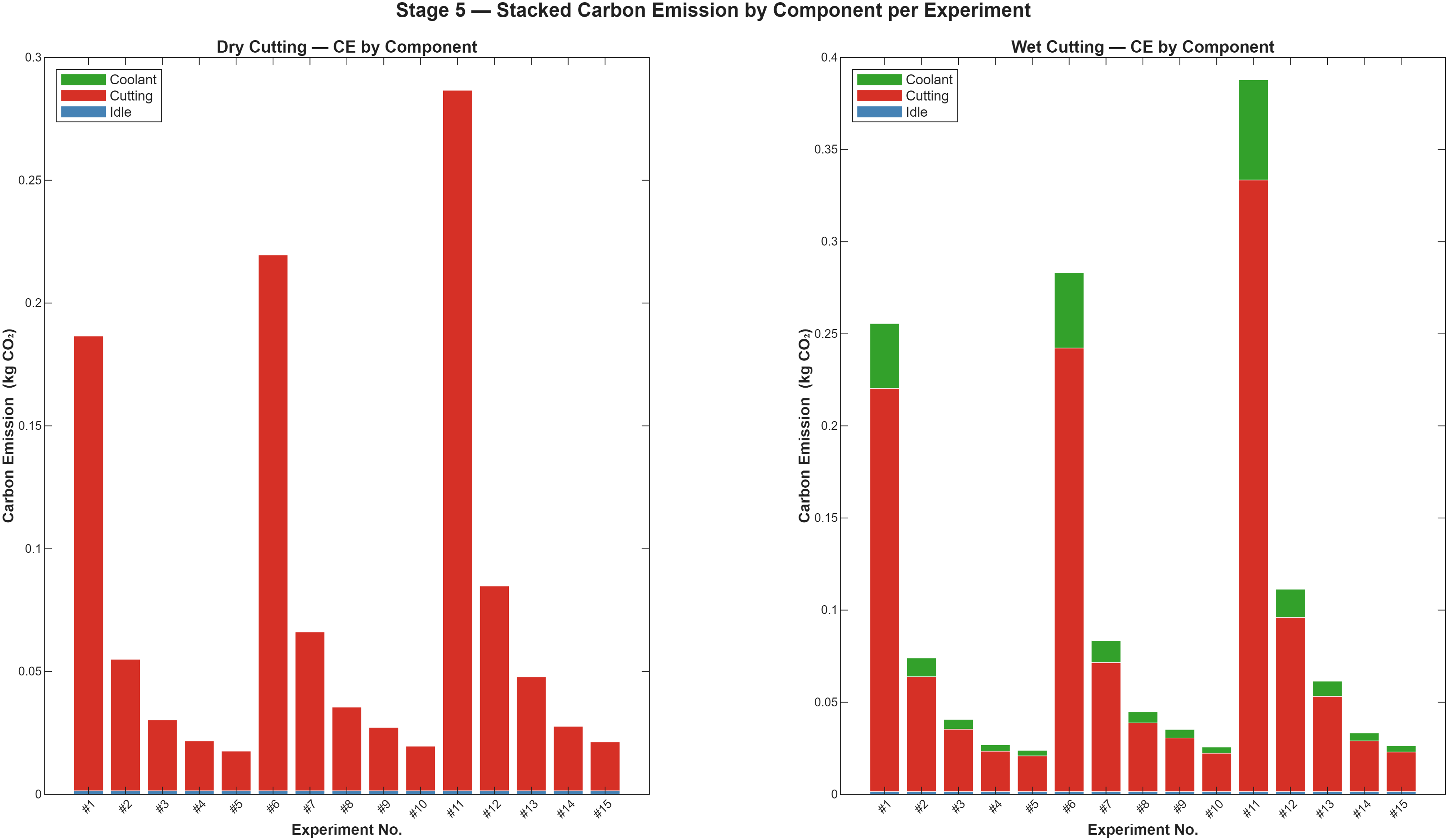
- —Conducted 30 full-factorial CNC turning experiments under dry and wet cutting conditions on a Haas CNC lathe, measuring energy consumption and emissions across varying parameter combinations.
- —Processed experimental data and performed Grey Relational Analysis (GRA) and TOPSIS multi-objective optimization calculations in Excel and MATLAB, cross-validated, to identify the optimal speed-feed-depth combination.
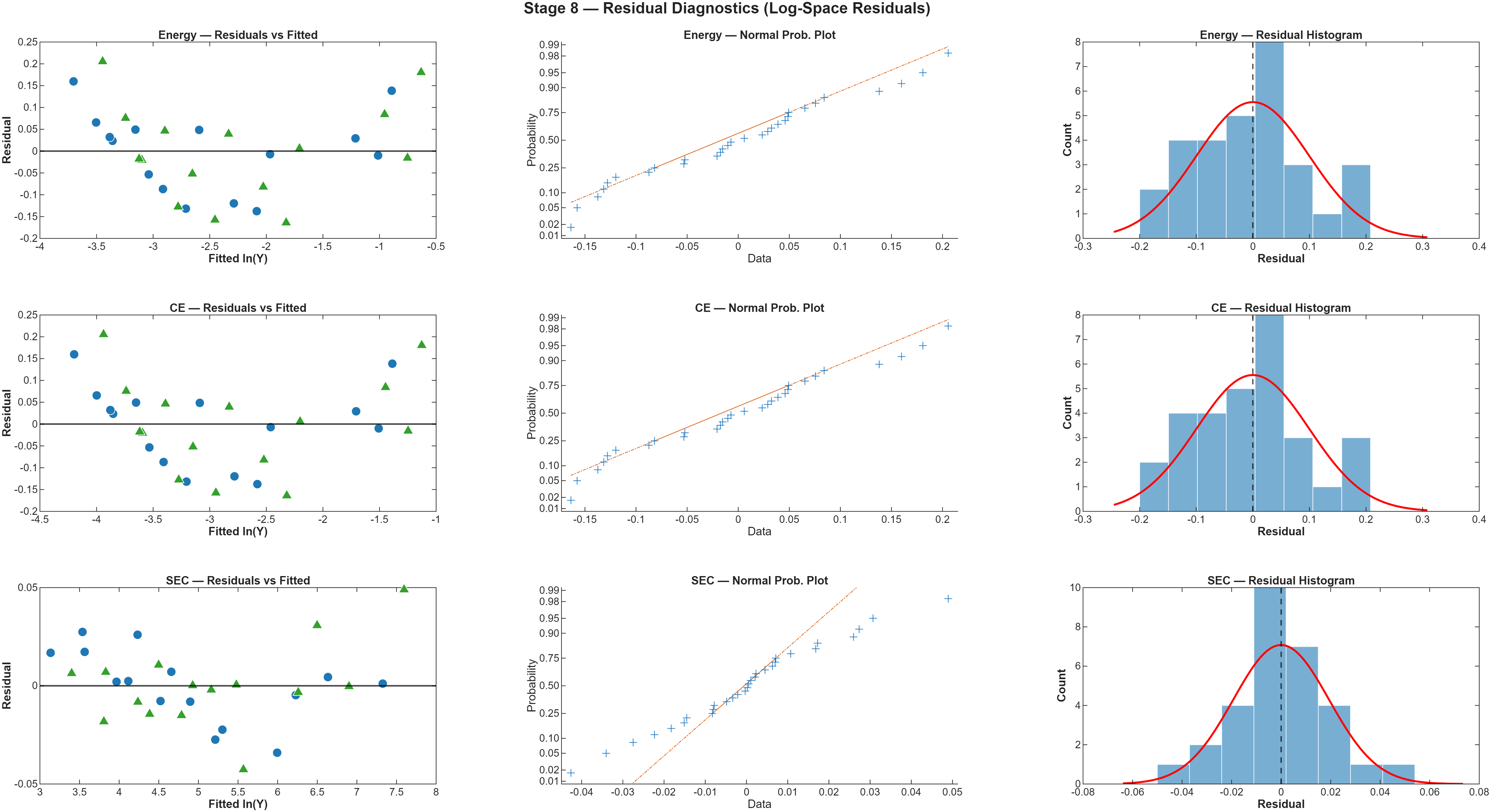
- —Built and validated power-law regression models in Minitab to predict energy consumption and emissions directly from cutting parameters.
Outcomes
- —Reduced carbon emissions by 93% and energy consumption by 91% versus baseline cutting parameters.
- —Brought specific energy consumption (SEC) down to 23.3 J/mm³ — the efficient-zone benchmark.
- —Validated predictive models with R² up to 99.97%, enabling sustainable process planning without further physical testing.